

Why US Toddlers Are Talking Later in 2026 (What Actually Changed)
I didn’t think much of it at first.
My friend in the US was casually complaining on a video call — “He still doesn’t say proper words.” Her son was almost two.
Then a few days later, another friend said the exact same thing.
Different city. Different kid. Same concern.
That’s when it clicked — this isn’t random anymore. There’s a pattern here. And yeah, the whole US toddlers talking later 2026 thing? It’s not just internet noise.
Something shifted.
Not dramatically overnight. But enough that people are starting to notice.
This didn’t suddenly start in 2026
People love blaming “this year” for everything.
But this has been building quietly for a while.
Even before 2020, screens were creeping in more. Parents were busier. Kids were spending more time indoors.
Then the pandemic happened — and honestly, that just sped everything up.
Kids who are toddlers now? They were born right in that phase or just after it. Their early world was smaller. Fewer faces, fewer voices, fewer random interactions.
And language doesn’t grow in isolation. It just doesn’t.
It’s not just screen time — it’s what got replaced
Everyone says, “kids use too many screens.”
That’s not wrong. But it’s also not the full story.
The real issue? What disappeared.
There used to be more… useless conversation. Random talking. Repeating the same word 20 times because a kid liked how it sounded.
Now it’s quieter.
Or worse — it’s one-way noise.
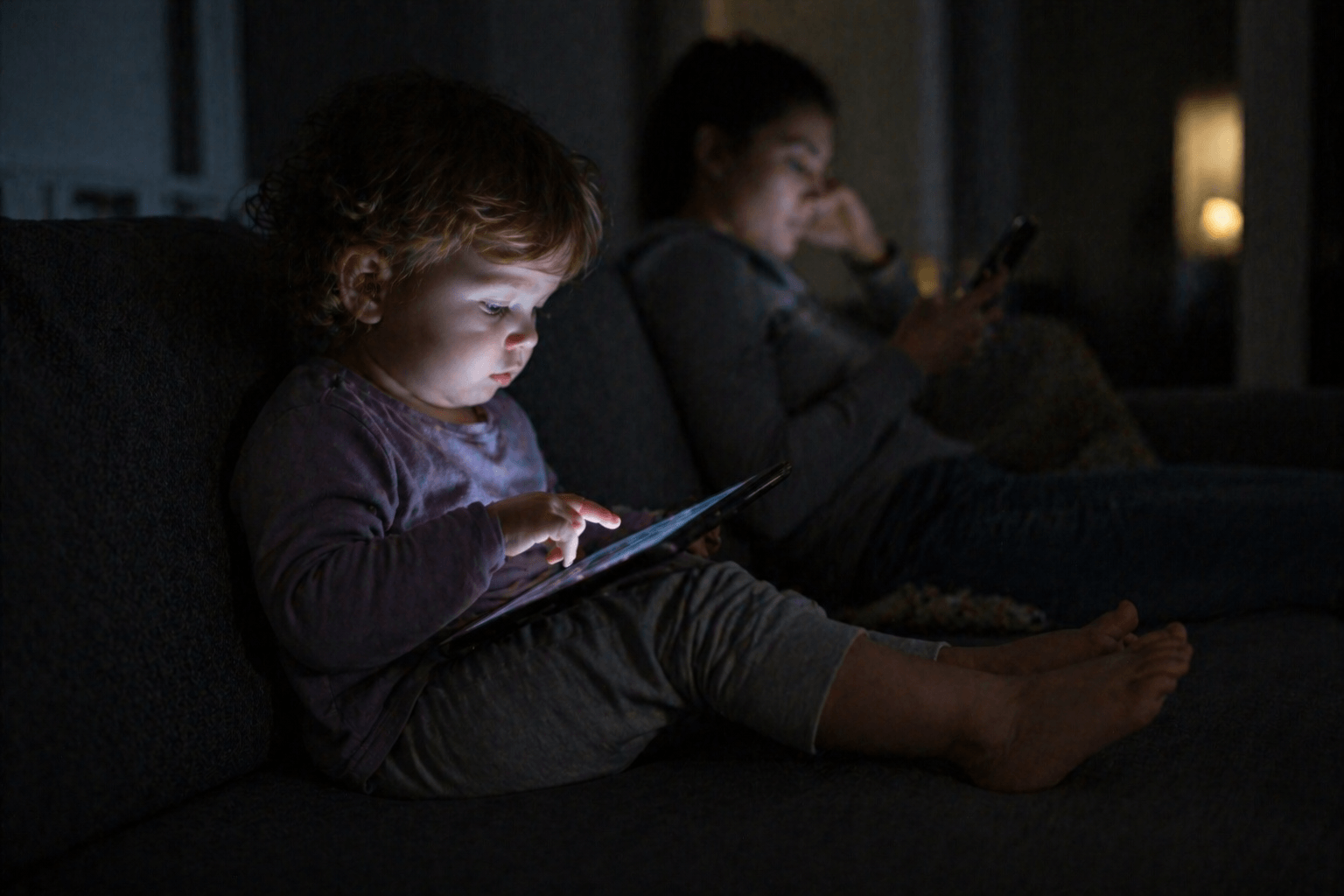
A toddler watching videos isn’t the same as a toddler trying to respond to you. Even if the video is educational. Even if it’s slow and colorful and designed by experts.
There’s no pressure to speak. No awkward pause where the child tries something.
That gap matters more than people think.
We talk to kids… but not like before
This part is a bit uncomfortable.
Parents are talking to their kids. Just differently.
A lot of it is functional.
“Come here.”
“Don’t do that.”
“Eat this.”
That’s communication, sure. But it’s not the kind that builds language.
Real language learning is messy. It’s repetitive. Slightly annoying, honestly.
“Ball.”
“Yes, ball.”
“Ba.”
“Ball!”
That loop — that’s where it happens.
But now, a lot of those moments get skipped. Life is faster. Attention is divided. Even when you’re sitting next to a kid, your brain might be somewhere else.
And kids notice that.
We made things too easy for them
This one surprised me the most.
Parents today are incredibly attentive. Almost too good at predicting what their kids need.
Kid points at water — boom, bottle in hand.
No struggle. No attempt. No need to say anything.
Earlier, kids had to try. Even if it was just “wa” for water. That effort pushed language forward.
Now? We’ve removed that tiny friction.
It feels like good parenting. And it is, in a way.
But it also quietly reduces the need to speak.
Daycare isn’t what it used to be
I spoke to someone working in early childcare in the US, and this was interesting.
Daycares today are more structured. More careful. More… organized.
Which sounds great, right?
But there’s less free chaos.
Less random kid-to-kid babbling. Less copying weird sounds from each other. Less unstructured play where language just sort of happens.
When adults guide everything, kids participate — but they don’t experiment as much.
And toddlers need that weird, messy experimentation phase.
Pandemic effect is bigger than people admit
This one gets mentioned, but not deeply enough.
Think about it — those early months matter a lot.
Seeing faces. Watching mouths move. Hearing different tones from different people.
Now imagine growing up around masked faces, limited visitors, fewer outings.
Even things like grocery store chatter, park conversations, or random interactions with strangers — all of that reduced.
You can’t fully “catch up” on that later. You can improve, yes. But early exposure has its own timing.
Also… we’re all a bit distracted now
Let’s be honest here.
We’re all on our phones more than we think.
You might be with your child physically, but mentally you’re checking messages, scrolling, replying, thinking about work.
It doesn’t feel like a big deal in the moment.
But those are the exact moments where kids would normally try to interact.
And if there’s no response… they stop trying as much.
A small thing I noticed while traveling
This might sound random, but stay with me.
When I was in France, I noticed something simple in cafés.
Kids sitting with adults. No tablets. No cartoons playing loudly. Just… people talking.
Interrupting each other. Laughing. Repeating things.
It reminded me of slower places. The kind you read about in guides like this Lyon food guide, where meals aren’t rushed and conversations stretch.
Or even quieter places like Annecy, where everything naturally slows down a bit.
And I kept thinking — maybe environment matters more than we admit.
Not in a fancy “European vs American” way. Just in terms of pace.
Slower environments create more space for talking. Faster ones fill that space with something else.
So should parents be worried?
Not automatically.
Some kids are just late talkers. That’s always been true.
But ignoring everything and saying “it’s normal” without paying attention? That’s not great either.
You have to look at the whole picture.
Is the child trying to communicate in other ways?
Do they respond when you call them?
Are they engaged, curious, interactive?
If yes, you’re probably looking at a delay, not a deeper issue.
If not, it’s worth checking early. No harm in that.
What actually helps (nothing fancy, honestly)
No expensive courses needed.
Just small changes.
Talk more than feels natural. Then keep going.
Describe things. Repeat words. Wait for responses, even if they’re slow or unclear.
Don’t jump in instantly every time they need something.
Let there be a tiny pause.
Also — cut down passive screen time a bit. Not eliminate. Just reduce.
Because language doesn’t come from hearing words.
It comes from trying to use them.
What most articles don’t say clearly
This isn’t about blaming parents.
It’s about noticing patterns.
The world changed. Parenting adapted. Kids responded.
Simple as that.
And once you see it like that, it stops feeling scary.
It just feels… fixable. US toddlers talking later 2026
FAQs
Why are US toddlers talking later in 2026?
Because of a mix of things — more screens, less interaction, pandemic effects, and changes in daily routines.
Is this something serious?
Not always. Many kids catch up. But if there are multiple signs, it’s worth checking early.
Do screens cause speech delay?
Not directly. But they often replace interaction, which slows language development.
What can parents do right now?
Talk more, pause more, reduce distractions, and give kids space to try speaking.
One thing that stuck with me
Kids didn’t suddenly change.
We changed the way they grow up.
And that’s actually good news — because it means we can change it back, at least a little