
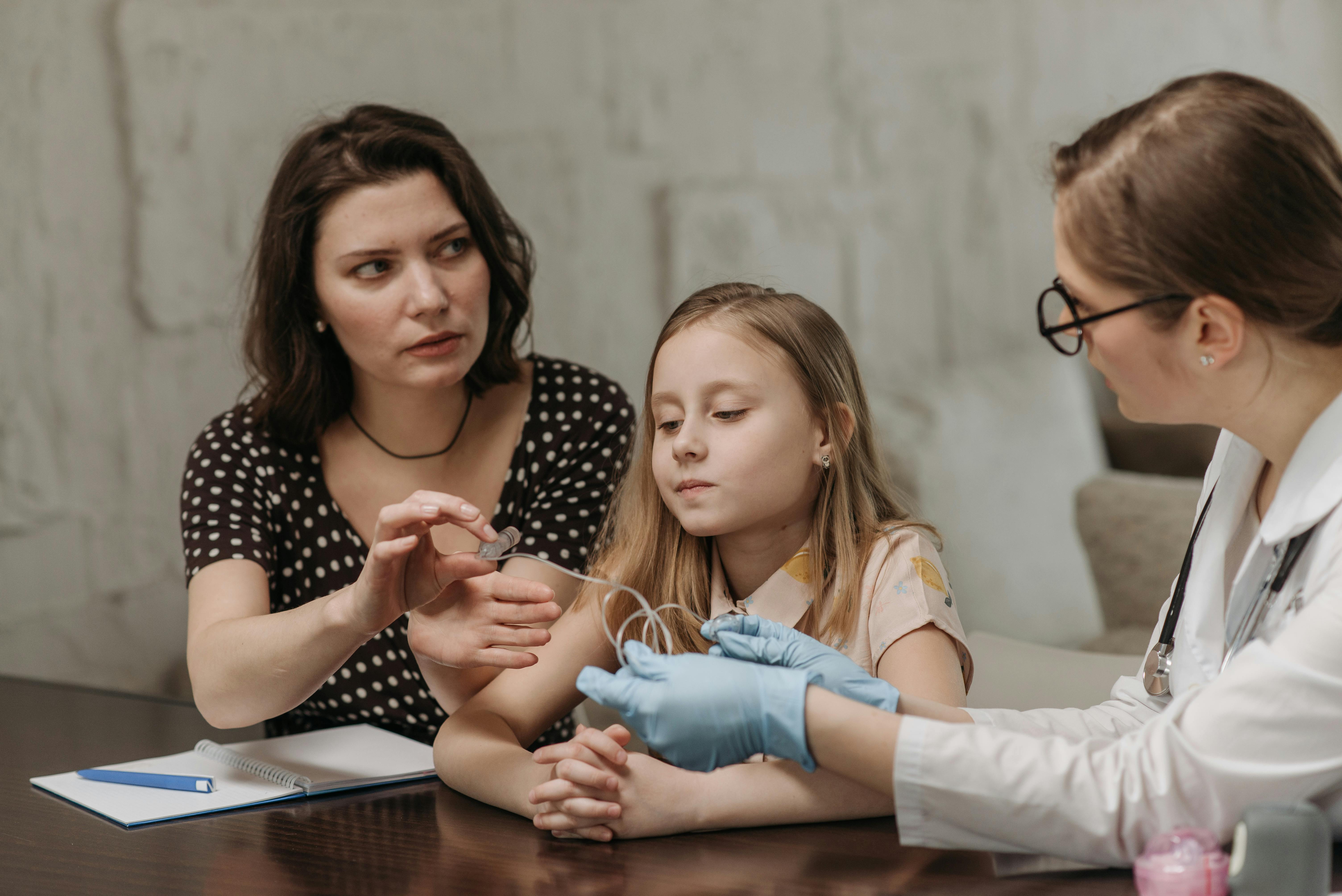
Young children get a lot of infections. Many per year is entirely normal, particularly after starting nursery or school, and the great majority are viral.
Antibiotics have no effect on viruses. Despite this, they're prescribed frequently for conditions where they won't help, and parental expectation is one of the documented drivers.
Viral versus bacterial
The conditions that dominate childhood illness are overwhelmingly viral.
Common colds, the great majority of sore throats, most coughs, bronchiolitis, most ear infections in the sense that many resolve without antibiotics, and viral gastroenteritis.
Bacterial infections occur and are less common in this context. Some require prompt antibiotic treatment and identifying them is a clinical judgement rather than something to be made at home.
Symptoms that people commonly take as indicating bacterial infection frequently don't. Green or yellow nasal discharge, for instance, is a normal feature of a viral cold's course and is not an indication for antibiotics — a persistent misconception.
Why the expectation exists
Several understandable reasons.
Timing. Most viral illnesses resolve on their own within a week or so. If antibiotics are started on day five, recovery on day seven looks like the antibiotics worked.
That coincidence, repeated, produces a strong impression of efficacy.
The desire to do something. Watching a child be ill and being told to wait is genuinely difficult. A prescription feels like action.
Practical pressure. Nurseries and schools sometimes require a child to be on treatment before returning, which creates a demand unrelated to clinical need.
Consultation dynamics. Studies have found that clinicians are more likely to prescribe when they perceive that a parent expects it, and that perception is frequently inaccurate. Parents often want reassurance and explanation rather than a prescription.
Which means saying explicitly that you're not looking for antibiotics, just wanting to know whether anything needs treating, can change the consultation usefully.
The costs of unnecessary prescribing
Resistance. The population-level concern. Antibiotic use selects for resistant organisms, and resistance is a serious and growing problem globally.
This is a collective action issue — the individual benefit of an unnecessary prescription is near zero and the collective cost is real, which is precisely the structure that produces overuse.
Side effects. Antibiotics commonly cause diarrhoea, and less commonly more significant reactions. A medication with no benefit and some risk is a straightforwardly poor trade.
Effects on the microbiome. Antibiotic courses disrupt gut microbial communities, with recovery over weeks to months. Research into consequences of early-life antibiotic exposure is ongoing and findings are not settled, and it's a reason for caution.
Reinforcing the expectation. Each unnecessary course strengthens the belief that they're needed, making the next consultation harder.
Delayed prescribing
An approach used in many health systems and worth knowing about.
A prescription is issued with instructions to use it only if symptoms worsen or fail to improve within a specified period.
Trials of this approach have found that a substantial proportion of prescriptions go unused, with no evidence of worse outcomes, while satisfying the desire for something concrete.
If offered, it's a reasonable middle position. If not offered and you're uncertain, asking about it is legitimate.
What to ask instead
Questions that produce more useful consultations than a request for antibiotics.
What do you think this is, and what makes you think that?
How long should this take to get better?
What specifically should I watch for that would mean bringing them back?
What can I do to make them more comfortable?
That third one matters most. Knowing the specific warning signs is more valuable than a prescription, because it tells you when the situation has changed.
Supportive care
For viral illness, what actually helps.
Fluids, offered frequently in small amounts. Rest. Paracetamol or ibuprofen for discomfort or fever, dosed by weight according to the product instructions.
Honey for cough in children over one year has some evidence and should not be given to infants under one due to botulism risk.
Saline drops for blocked noses in infants.
And time, which is the main ingredient and the hardest to accept.
When to seek help urgently
Regardless of the cause, some signs warrant immediate attention: difficulty breathing, a rash that doesn't fade under pressure, reduced responsiveness, signs of dehydration, a stiff neck, a seizure, or any fever in a very young infant.
And your own strong sense that something is wrong, which is a recognised indicator in clinical guidance.
This article is general information and not medical advice. Any concerns about a child's illness should be discussed with a qualified healthcare professional, and always complete a course of antibiotics if one has been prescribed.
Completing the course, and the debate about it
Worth mentioning because the advice has been questioned publicly and the questioning has caused confusion.
The traditional instruction to complete every course has been challenged by some researchers arguing that shorter courses are adequate for many infections and that longer exposure may itself drive resistance.
That debate concerns how long courses should be prescribed, which is a decision for clinicians and guideline bodies, not for patients partway through.
The practical guidance remains: take the course as prescribed. If you think it should be shorter, that is a conversation with the prescriber rather than a decision to stop early, since stopping when symptoms improve leaves an infection partially treated.