
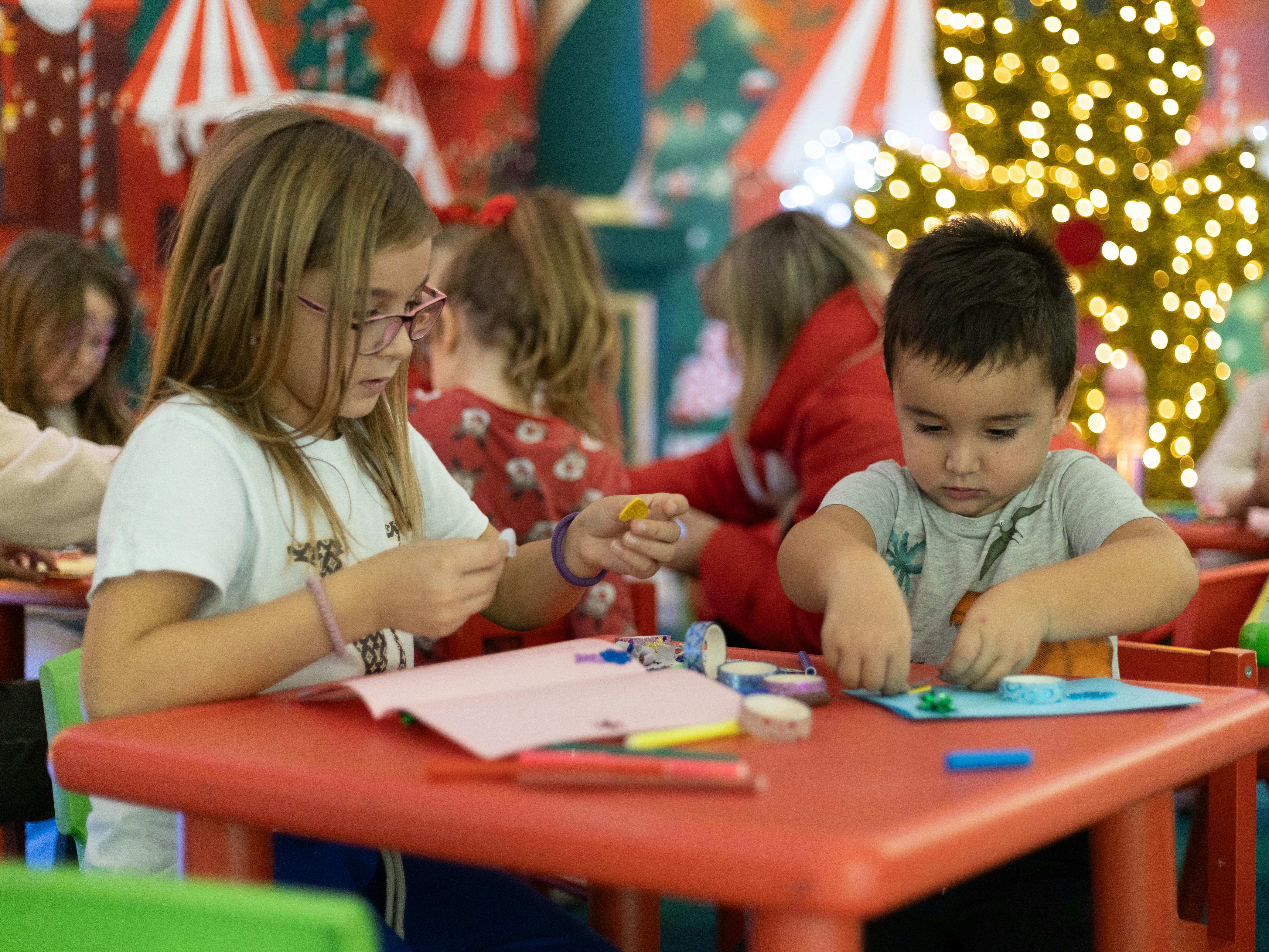
Messy play is defended in early years settings and resisted in most homes. The disagreement is not about value but about who does the cleaning.
Some properties can only be felt
Weight, resistance, temperature, stickiness and how a material behaves under pressure are not visible. A child learns that wet sand holds a shape and dry sand does not by handling both.
These properties underpin later reasoning about volume, quantity and cause. Pouring water between differently shaped containers is the groundwork for understanding that quantity survives a change in appearance.
Watching an adult do it transmits far less. The information arrives through the hands, and the child needs to control the variables themselves for it to be informative.
Repetition is the method, not a failure
Children fill and empty, pour and re-pour, and squash the same dough repeatedly. This looks aimless and is closer to systematic testing.
Each repetition varies something slightly, such as the height of the pour or the pressure applied, and the child observes what changes. Consistency across trials is what makes a property learnable.
Interrupting to redirect toward a product breaks the sequence. The finished painting matters far less than the discovery of what happens when two colours meet.
Reluctance to touch is itself worth working with
Some children strongly dislike the sensation of certain materials and avoid them. Forcing contact tends to entrench the aversion rather than reduce it.
Graded exposure works better: tools before hands, dry materials before wet, and a clear route to washing. Control over stopping is what makes approach possible.
Where sensory avoidance is intense, extends across many everyday situations and interferes with eating or dressing, that is a reasonable thing to raise with a health professional rather than manage alone.
Containment is the practical problem
Most household resistance is about the boundary of the mess rather than the mess itself. Defining that boundary in advance changes the calculation considerably.
A tray, a mat, a bathroom floor, a garden or the space around a sink all confine the material to somewhere already easy to clean, which removes the reason to keep intervening.
Clothing plays the same role. A child dressed in something that cannot be spoiled is not being told to stop every few minutes, and the play lasts long enough to become useful.
Involving the child in the aftermath
Clearing up is part of the activity rather than a penalty attached to it, and small children usually accept that framing if it has always been the arrangement.
The clearing itself involves pouring, wiping, wringing and sorting, which are the same physical skills the play was building. It is not lost time.
Households that treat mess as a bounded, scheduled event tend to permit more of it than households that treat each instance as an unplanned emergency.