
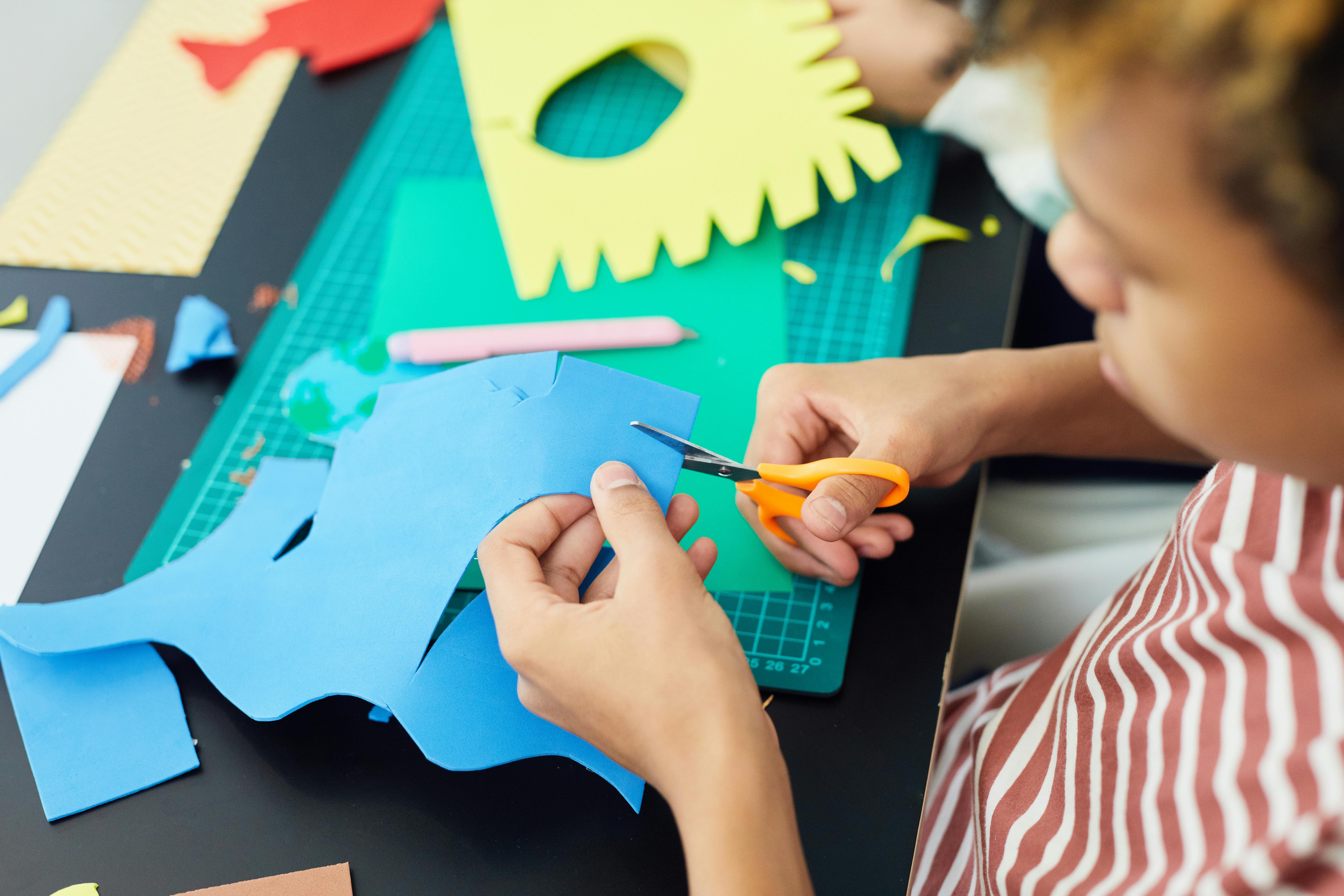
Children return repeatedly to boxes, sticks, fabric and containers while elaborate toys sit unused. The pattern is consistent enough to be worth explaining rather than treating as a curiosity.
Objects carry suggestions about their use
Every object signals what can be done with it. A handle suggests gripping, a button suggests pressing, and a toy shaped like one specific thing suggests being that thing.
The stronger and narrower those signals, the more of the play is determined before the child begins. A toy that performs a routine when pressed has already decided what happens.
Materials without a fixed function carry weak, plural signals. A length of fabric can be a river, a roof, a cloak or a bandage, and the child must decide which.
The decision is where the work sits
Supplying the idea requires holding a plan, adapting it as the material resists, and remembering what has been agreed. Those are the same capacities that support later self-directed work.
When the object supplies the idea instead, the child performs it. The activity can still be enjoyable, but the demand shifts from generating to following.
This is why open-ended materials often produce longer play episodes despite being less immediately engaging. The engagement is generated internally and therefore does not run out on a fixed schedule.
Novelty and depth pull in different directions
Single-purpose toys are attractive precisely because they demonstrate their appeal instantly, which is what makes them effective in a shop and on a shelf.
That same immediacy exhausts quickly. Once the routine is known, the object has little left to offer, and interest declines sharply rather than gradually.
Open-ended materials show poorly on first contact and improve with familiarity, since each session builds on what was discovered in the last one.
What a good open-ended set looks like
The useful collections tend to share a few properties, and cost is rarely one of them.
- Items that combine, stack or connect in more than one way
- Several of the same thing, so quantity can be part of the idea
- Materials that change shape, such as fabric, dough, sand or water
- Containers, because filling and emptying is a durable interest
Most households already own enough of this. The limiting factor is usually storage and tolerance rather than acquisition.
The adult role is smaller than it looks
Adults who join open-ended play often begin directing it, which reintroduces the script the materials were avoiding. Commentary tends to work better than suggestion.
Supplying more material when the play stalls, and resisting the urge to tidy mid-episode, preserves the thread that the child is holding.
The measure of whether it is working is not what gets built but whether the child continues after the adult stops paying attention.